
Knob and Tube Wiring Insurance Questions at Closing
You have an offer accepted on a 1920s house near downtown Ann Arbor. The inspection comes back with a line about porcelain knobs in the basement, and a day later your insurance agent calls with questions about the wiring.
Knob and tube wiring insurance is one of the most common worries for buyers of older Michigan homes, and the answer depends on facts an electrician can sort out quickly. Insurers and inspectors flag a few specific things, the report wording has plain meanings, and you can get ahead of all of it.
Why Insurers Ask About Knob and Tube Wiring
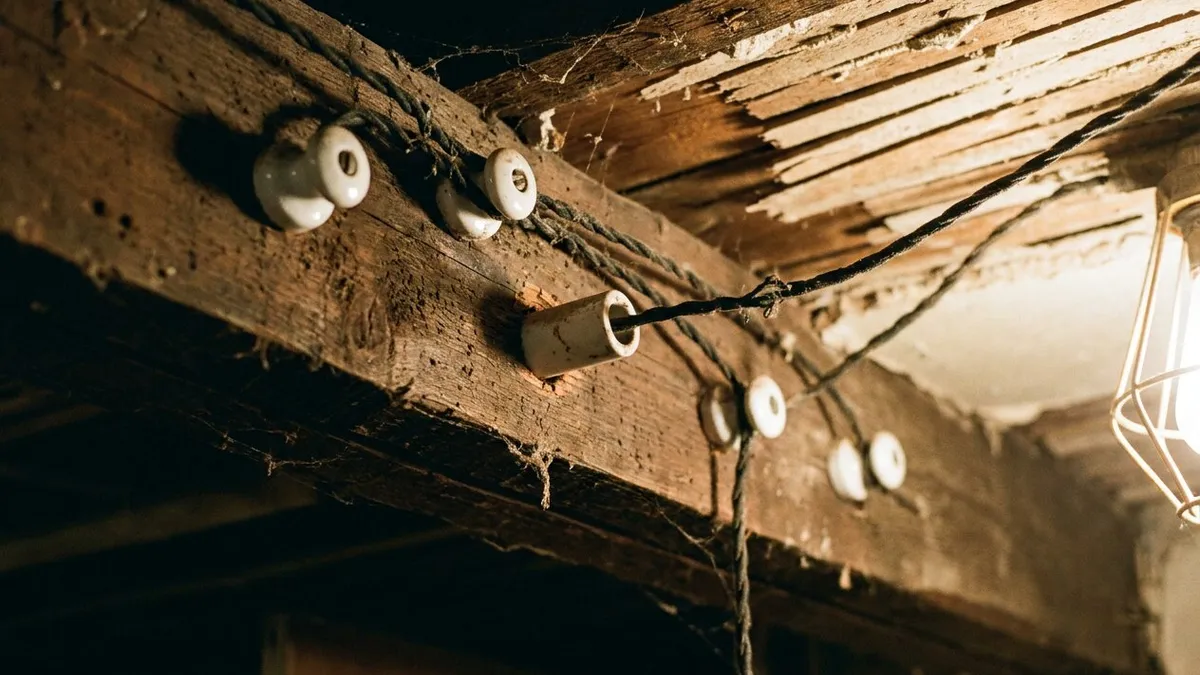
Knob and tube wiring was installed from the late 1800s into the early 1940s. It uses separate hot and neutral wires held off the framing by porcelain knobs and passed through joists in porcelain tubes. It has no ground wire, and the cloth and rubber insulation gets brittle with age.
Those traits are why insurers pay attention. They also see homes where the old wiring was spliced by earlier owners, or where insulation was blown in around it. Wiring designed to shed heat into open air can overheat when it is buried.
What Insurers May Do (and Why You Ask Your Agent)
We install wiring, we do not write policies, and we will not tell you what a particular company will do. Policies and underwriting vary by insurer, by region and over time. Some companies decline homes with active knob and tube wiring. Others write the policy with conditions or ask for an evaluation by a licensed electrician.
What we can tell you is what usually helps the conversation. Ask your agent which questions the carrier will ask, whether it matters if the wiring is live, and whether a written electrician’s report or completed replacement changes the answer. Get the response in writing.
How to Read the Inspection Report
Home inspectors use a few phrases for old wiring, and they mean different things to an insurer and to your wallet.
- Active. Knob and tube circuits are still carrying power to outlets, lights or appliances. This is the situation that raises the most questions.
- Abandoned in place. The old runs are still in the walls or joists but are disconnected from power. They are not a live hazard, though an electrician should confirm they are dead.
- Partially replaced. Some circuits were rewired with modern cable and others were left on the old system. The report may not say which is which.
- Evaluate by a licensed electrician. The inspector saw enough to be concerned but does not test each circuit as part of the job.
Inspectors work from what is visible. A finished wall can hide live runs that nobody has seen, which is why a circuit-by-circuit check is worth more than a guess.
What an Electrician Can Document
A home electrical inspection turns a vague line in a report into specifics. We trace the circuits, test which ones are live, check the panel and note what else in the system affects the picture, such as a fuse box or an undersized service.
You get written findings in plain language: where the knob and tube wiring runs, what is active, what is abandoned in place and what we would recommend. Buyers use that to negotiate. Sellers use it to answer questions before a deal falls apart. Insurance agents can use it when they talk with the carrier.
Replace It or Leave It: Your Options Before Closing
Once you know what is live, there are a few paths, and none of them require a decision on day one.
- Ask for a credit or a price change. The written findings give you something concrete to bring to the seller.
- Ask the seller to replace the wiring. This works best when the work can be scheduled and inspected before closing.
- Plan the replacement yourself. Many buyers close first, then schedule the rewire soon after, sometimes alongside a panel upgrade.
For wiring that is still in use, we recommend knob and tube wiring replacement. We trace each live run, install new grounded circuits and reach most walls from the attic and basement, so patching stays small. When the job is done, we can document the completed work and the passed inspection for your insurer or your buyer.
A Short Checklist Before You Close
Closing dates move fast, so a plan helps. These steps keep knob and tube wiring from becoming a last-minute problem.
- Read the inspection report for the exact wording: active, abandoned in place or partially replaced.
- Call your insurance agent and ask what the carrier needs to see for a home with this wiring.
- Have an electrician test the circuits and put the findings in writing.
- Look at the panel too. Homes with old wiring often still have a fuse box or a small service.
- Decide whether to ask for a credit, ask for the work before closing or schedule the rewire yourself.
Insulation is worth raising with the seller as well. If the attic or walls were insulated around live wiring, the electrician should note it, because heat buildup is one of the reasons these circuits get replaced first.
Already Own the House? Start With What Is Live
Plenty of owners learn about knob and tube wiring years after they bought, when a renewal letter or a refinance brings it up. The steps are the same. Find out which circuits are live, ask your agent what the insurer wants and decide whether to replace now or plan it in stages.
Replacing the live runs first is a sensible order of work in many houses. It removes the circuits with the most risk, and it keeps the project manageable if you are also planning a kitchen update or a panel upgrade.
Older Ann Arbor Area Homes and Next Steps
Ann Arbor’s older neighborhoods are where we find the most knob and tube wiring, but it turns up across the county. Ypsilanti has plenty of early twentieth century housing, and so does downtown Plymouth. Our Ypsilanti and Plymouth pages cover how we work in those towns.
If you are weighing a purchase, call us early. An inspection takes a short visit, and it is much easier to negotiate with facts than with a surprise during underwriting. Our work is priced at time and material, and our pricing page explains how that works. Free estimates, and you can reach us through the contact page.
For broader projects, see our house rewiring service.