
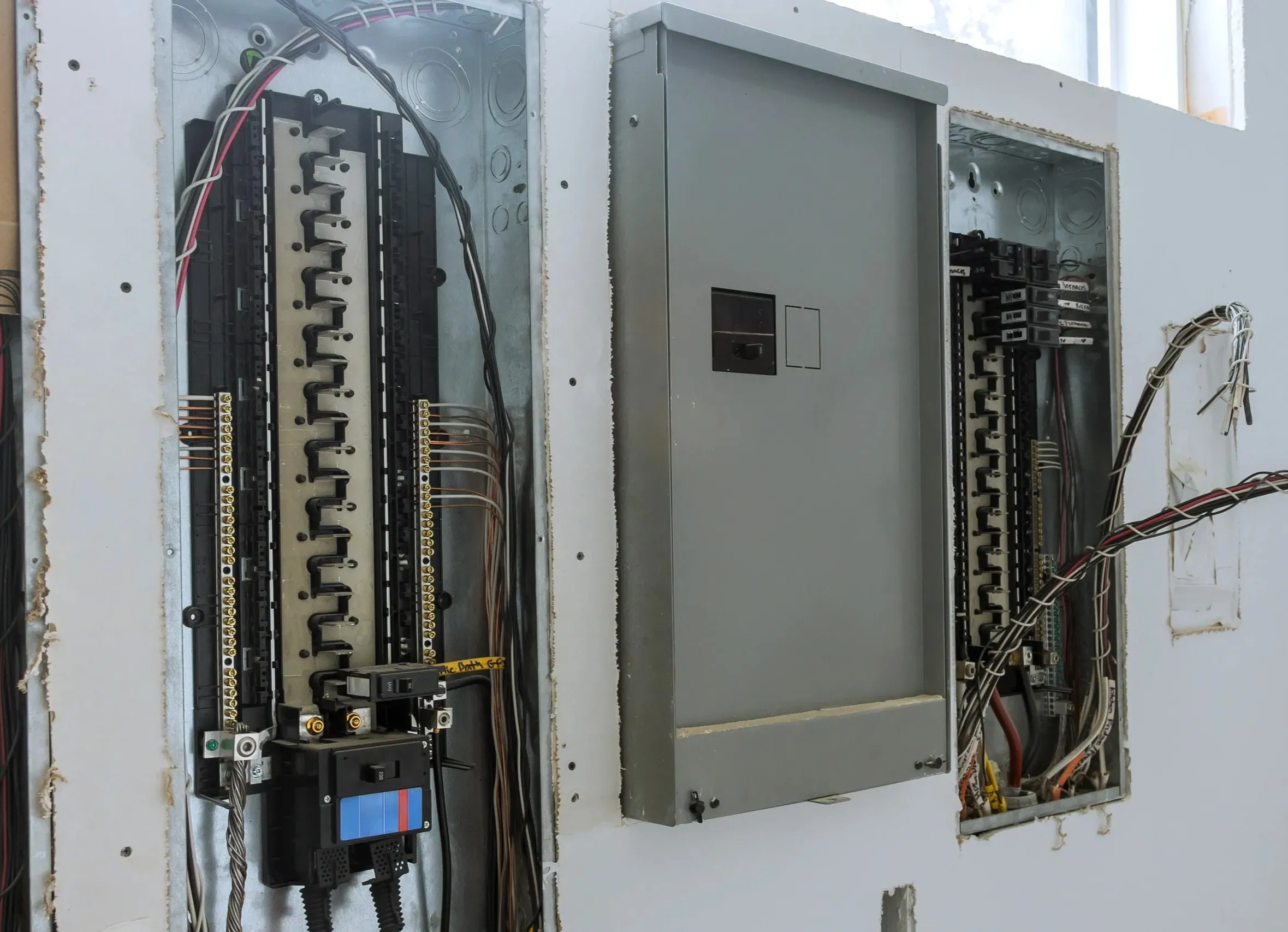
How a Generator Interlock Kit Works
A generator interlock kit is a simple mechanical device, and that simplicity is what makes it so reliable. It is a sliding plate that mounts on the front of your electrical panel, positioned between the main breaker and a dedicated generator breaker.
When the main breaker is on, the plate blocks the generator breaker from turning on. To switch to generator power, you turn the main breaker off, slide the plate over and turn the generator breaker on. There is no way to have both on at once.
That one rule keeps generator power inside your home and utility power out of your generator. Your panel then works normally, and you choose which circuits to run by flipping individual breakers.
Portable Generator Hookup to Your House, Step by Step
A complete portable generator hookup has three parts that work together:
- The interlock kit on your panel, listed for your panel’s brand and model
- A generator breaker in the panel, sized for your generator and secured as the code requires
- A generator inlet box mounted outside, where your generator cord plugs in
During an outage, the routine looks like this:
- Roll the generator outside, well away from windows and doors, and start it.
- Plug the generator cord into the generator and the inlet box.
- Turn off the main breaker, slide the interlock and turn on the generator breaker.
- Turn on the circuits you want, starting with the biggest loads one at a time.
We walk you through the whole routine on installation day, and many homeowners tape a short checklist inside the panel door.
The Generator Inlet Box
The inlet box is the connection point on the outside of your home. It is a weatherproof, recessed male connector, so the generator cord plugs in safely and nothing live is ever exposed.
We place the inlet where you can reach it easily in the snow, close to where the generator will sit, and far enough from windows and doors to keep exhaust out of the house. The inlet is matched to your generator’s outlet, commonly a 30 amp or 50 amp twist-lock connection.
Transfer Switch vs. Interlock Kit
Both a manual transfer switch and an interlock kit are safe, code-compliant ways to connect a portable generator. They just approach the problem differently.
A manual transfer switch is a small separate panel prewired to a fixed set of circuits, often six to ten. It is simple to use, but you are limited to the circuits you chose at installation. Adding one later means new wiring.
A generator interlock kit uses your existing panel. Any circuit in the house can be powered, as long as the generator can handle the load. It usually takes less time to install and less material.
For most portable generator owners, we recommend the interlock. It is flexible, easy to understand and a great value. If you would rather have automatic, hands-off backup, a whole house standby generator is the next step up.
Why Extension Cords and Backfeeding Are Dangerous
Running extension cords through a window works for a refrigerator and a lamp, but it cannot power hardwired equipment like your furnace, sump pump or well pump. Cords also get pinched in windows, overheat when undersized and leave doors or windows open for exhaust to drift inside.
The bigger danger is backfeeding. Some people plug a generator into a dryer or wall outlet with a male-to-male cord. That sends power backward through the panel and out onto DTE’s lines, where the pole transformer can step it up to a level that can seriously injure or kill a line worker. It also leaves live metal prongs exposed on the cord. An interlock kit prevents all of this.
Sizing Your Portable Generator
A good generator hookup starts with knowing what you want to run. Motors in sump pumps, furnace blowers, well pumps and refrigerators draw a surge of power when they start, often several times their running load.
We help you think through:
- Which circuits matter most during a Michigan outage
- The starting and running watts of your key equipment
- Whether your generator’s outlet matches a 30 amp or 50 amp inlet
- How to stagger loads so the generator is never overloaded
If you are shopping for a generator, we are happy to talk through sizes before you buy.
Does My Panel Work With an Interlock Kit?
Interlock kits are made for specific panel brands and models, because the plate has to line up with the main breaker and the breaker spaces beside it. Most modern panels from major manufacturers have a listed kit available.
Some older panels do not. If your home has a Federal Pacific or Zinsco panel, or a panel with no room for a generator breaker, we will explain your options. That might mean a panel replacement first, which also gives you a safer panel for everyday use.
Keeping Your Setup Ready
A generator that sits all year can let you down when you need it. Run it every few months, keep fresh fuel with stabilizer on hand and store the cord somewhere dry. Our guide to generator maintenance in Michigan has a simple seasonal checklist. Keep carbon monoxide alarms working on every level of your home, and see our smoke and CO detector service if yours need replacing.
Why Choose Current Electrical Systems for Your Interlock Kit
Portable generator hookups have been a specialty of ours for years. We have served Ann Arbor and Washtenaw County since 1994, and our electricians are union trained through IBEW Local 252. We match the interlock to your panel, install the inlet where it makes sense and pull the permit. Learn more about all of our generator installation options, or call (734) 210-7667 to schedule a visit.