
Why Ann Arbor Homeowners Are Adding Generators
Michigan weather does not give much warning. A mild March afternoon can turn into an ice storm overnight, with coated branches snapping onto power lines across the county. Summer brings its own risk, as strong thunderstorms push over trees in older neighborhoods full of mature oaks and maples.
When the power goes out for a few hours, it is an inconvenience. When it stays out for days, it becomes a real problem. A generator keeps the most important parts of your home running until DTE restores service.
What a Generator Protects in a Michigan Home
Most people think about lights first, but the systems that matter most are the ones that protect the house itself:
- Sump pumps. Spring thaws and heavy summer rain can flood a basement quickly when the pump stops.
- Furnaces and boilers. Most gas furnaces need electricity to run the blower and controls. Without power, the house gets cold fast in January.
- Refrigerators and freezers. A generator saves you from throwing out a full kitchen of food.
- Well pumps. Homes on a well have no running water during an outage.
- Medical equipment. Oxygen concentrators and other devices cannot wait for the lines to be fixed.
- Home offices. Internet, computers and phone chargers keep your work going.
Whole House Generator vs. Portable Generator With an Interlock
There are two good ways to back up your home, and the right one depends on your budget, your house and how hands-on you want to be.
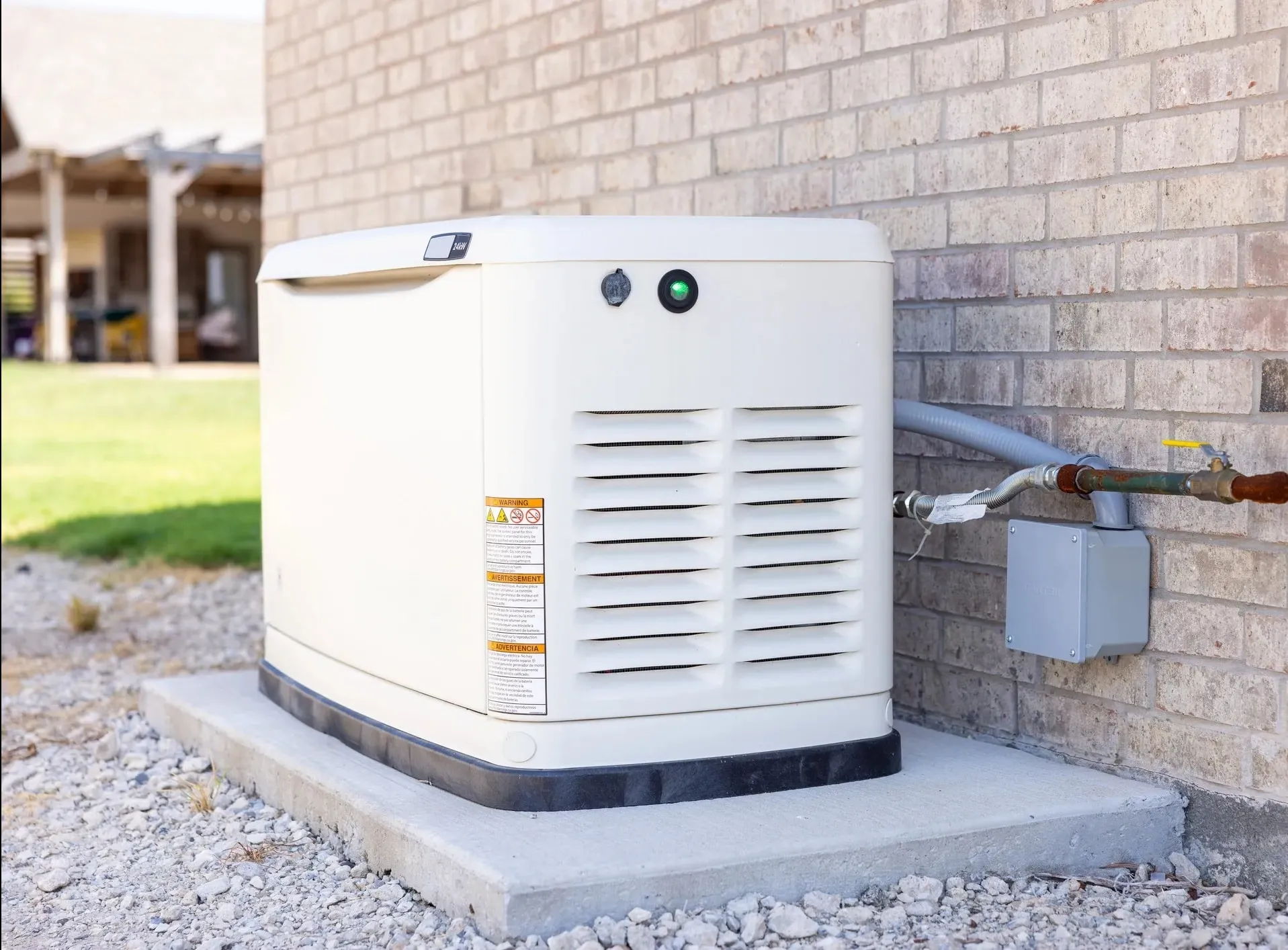
A whole house standby generator sits permanently outside on a pad and runs on natural gas or propane. When the power fails, an automatic transfer switch starts the generator and switches your home over within moments, even when nobody is home. We install Generac and Honeywell standby generators. Learn more on our whole house generator installation page.
A portable generator with an interlock kit is the budget-friendly path. You roll the generator out, plug it into an inlet box on the outside of the house, and flip a few breakers in the panel.
The interlock makes it impossible to have the main breaker and generator breaker on at the same time. This has long been one of our specialties. See our generator interlock kit installation page for the details.
Which Generator Is Right for Your Home?
A few questions usually point to the right answer:
- Are you often away from home? A standby generator protects the house and sump pump even when nobody is there to start a portable unit.
- Do you work from home or rely on medical equipment? Automatic backup removes the gap between the outage and the generator starting.
- Do you already own a portable generator? An interlock kit lets it power the circuits you choose through your existing panel.
- Do you have natural gas service? Most standby units in Ann Arbor run on it, which means no fuel to store.
The Danger of Backfeeding
Some people try to power their house by plugging a portable generator into a dryer or wall outlet with a homemade double-ended cord. Please do not do this.
That setup sends generator power backward through your panel and out onto the utility lines. It is called backfeeding. The transformer on the pole can step that power up to thousands of volts, putting DTE line workers in serious danger. It can also damage the generator and your home’s wiring when utility power returns, and it leaves bare, live prongs on the end of the cord.
A properly installed interlock kit or transfer switch prevents all of this. It is the safe way, and it is what the electrical code requires.
Generator Installation in Ann Arbor, Step by Step
- Walkthrough. We talk about what you want to keep running, look at your panel and gas service, and recommend a standby or portable setup.
- Sizing and planning. We match the generator to your home’s real loads, including the startup surge of pumps and furnace blowers.
- Permits. We pull the electrical permit and coordinate the other approvals a standby unit needs.
- Installation. Our electricians install the transfer switch or interlock, the inlet or generator wiring, and label everything clearly.
- Inspection and walkthrough. We meet the inspector, test the system and show you exactly how it works.
Generator Repair and Service
A generator that will not start during an outage is a frustrating surprise. We handle generator repair and troubleshooting for standby units and the electrical side of portable setups, including:
- Standby generators that will not start or will not transfer
- Automatic transfer switch problems
- Worn or damaged inlet boxes and generator cords
- Interlock kits that were never installed correctly
- Panels that need updating before a generator can be connected safely
Regular exercise and maintenance catch most problems before a storm. Our guide to generator maintenance in Michigan covers what to check each season.
Portable Generator Safety Basics
Portable generators produce carbon monoxide, which you cannot see or smell. Always run them outdoors, well away from windows, doors and vents, and never in a garage, even with the door open. Keep working carbon monoxide alarms on every level of your home. We can install or replace smoke and CO detectors while we are there.
Why Homeowners Trust Current Electrical Systems With Generators
We have been doing electrical work in Ann Arbor since 1994, and our electricians are union trained through IBEW Local 252. We install whole house generators and interlock kits, handle the permits and inspections, and make sure you understand how to use your system before we leave. Call (734) 210-7667 to schedule generator installation or repair.