
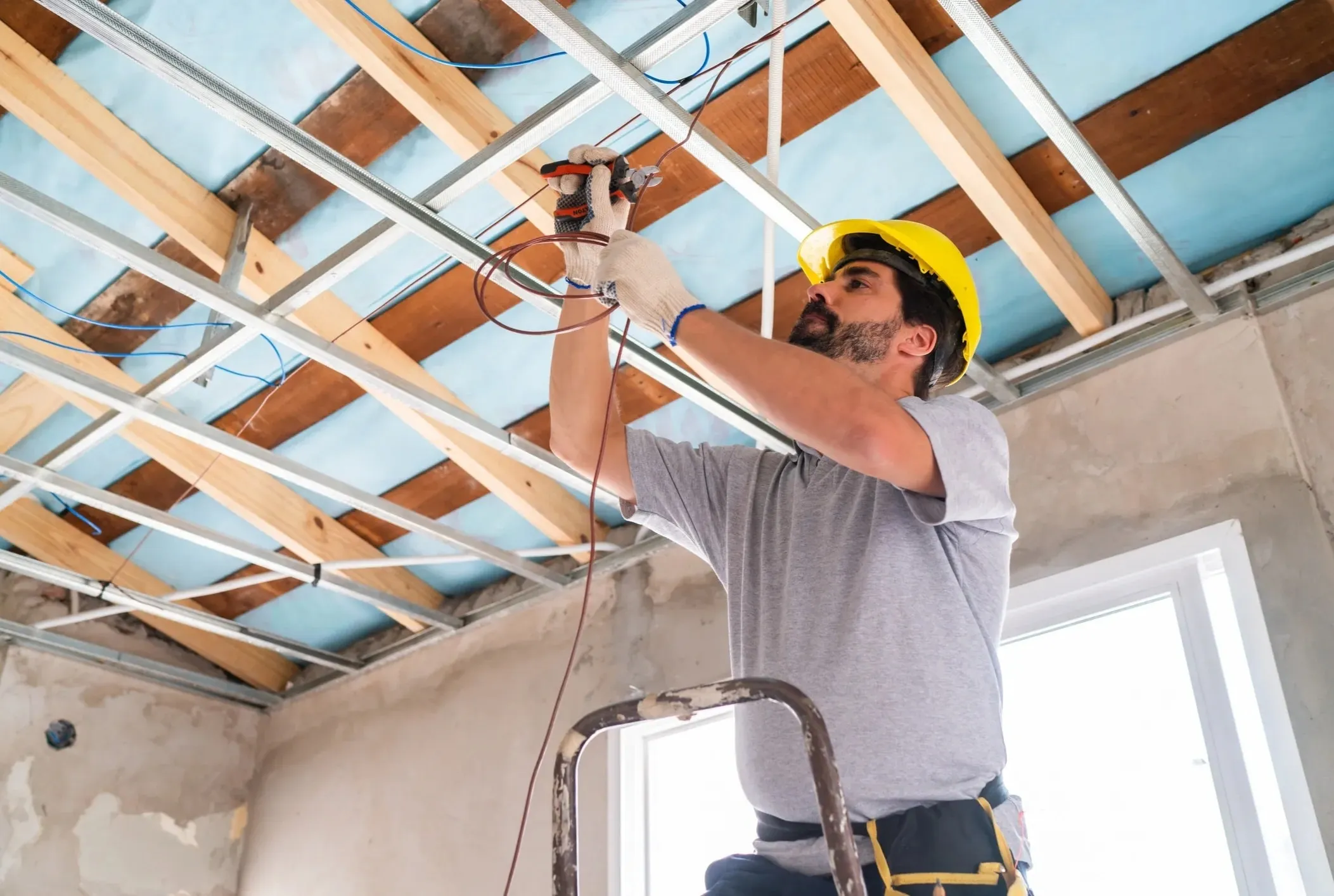
House Rewiring for Older Ann Arbor Homes
Many Ann Arbor homes are older than the appliances plugged into them. A house wired in the 1920s, 1950s or even 1970s was built for a few lamps, a radio and a refrigerator. Today the same wiring feeds computers, space heaters, microwaves, window air conditioners and phone chargers in every room.
Old wiring doesn’t always fail in an obvious way. Insulation dries out, connections loosen over decades and past owners may have added circuits that were never done right. House rewiring replaces that aging system with modern, grounded wiring that’s sized for how you live now.
Signs You Need Rewiring
Call us to take a look if your home has any of these:
- Two-prong outlets in most rooms, or three-prong outlets that aren’t actually grounded
- Knob and tube wiring or cloth-covered wiring in the basement, attic or walls
- Aluminum branch wiring, common in homes built in the late 1960s and early 1970s
- Lights that flicker or dim when appliances start
- Outlets or switch plates that feel warm, or discolored outlets
- Breakers that trip or fuses that blow regularly
- A burning smell with no obvious source
- Extension cords and power strips doing the job of missing outlets
A burning smell or a warm outlet needs attention right away. Turn off that circuit and call us.
Whole House Rewiring vs. Partial Rewiring
Whole house rewiring replaces every branch circuit in the home, from the panel out to every outlet, switch and light. It’s the right choice when the entire system is knob and tube, badly deteriorated or ungrounded throughout. It’s also the most efficient way to bring an older house fully up to date in one project.
Partial rewiring targets specific areas. Maybe the kitchen and bathrooms need new circuits, or the original second floor still has cloth wiring while the rest was updated. We inspect the whole system first, then recommend what actually needs replacing so you aren’t paying to rewire circuits that are in good shape.
Ungrounded Outlets, Cloth Wiring and Aluminum Wiring
Ungrounded two-prong outlets have no path for fault current to reach ground. That leaves electronics unprotected and removes a layer of shock protection. A GFCI outlet is an allowed fix in some spots, but new grounded circuits are the long-term answer.
Cloth-insulated wiring was common from the 1930s into the 1960s. Over time the rubber under the cloth becomes brittle and can crack when disturbed, leaving bare conductors inside walls and boxes.
Aluminum branch wiring expands and contracts more than copper, which can loosen connections and create heat at outlets and switches. Options include a full rewire or repairing each connection with connectors rated for joining aluminum to copper.
If you still have knob and tube wiring, our dedicated page explains how we replace it.
How We Rewire an Occupied Home With Minimal Wall Damage
Most people picture rewiring as gutting the walls. In practice we leave nearly all of your walls in place. Here’s how a typical house rewiring goes:
- Inspection and plan. We trace existing circuits, check the panel and map a route for each new run through the attic, basement and wall cavities.
- Small, planned openings. We cut small access holes at key points, such as where a wall meets the ceiling, and fish new cable through from above and below.
- Room by room. We work through one area at a time and restore power to finished rooms at the end of each day whenever we can.
- Old wiring disconnected. Old wiring we can reach is removed. Wiring sealed inside walls is disconnected and left dead so it can’t carry power.
- Inspection and walkthrough. The city or township inspector checks our work, and then we walk you through the new system.
We keep openings as small and clean as possible, which makes patching straightforward. In plaster walls, we take extra care to avoid cracks. It’s the same system we use for knob and tube replacement, built to minimize repairs afterward and keep the overall cost down.
Rewiring for Renovations
If you’re opening walls for a kitchen, bath or basement project anyway, it’s the best time to replace old wiring in that part of the house. We coordinate with your contractor so new circuits go in before insulation and drywall. See our remodel electrical work page for more.
Electrical Rewiring Cost Factors
Every house is different, so we estimate each rewiring job after seeing it. The main things that affect cost are:
- Size of the home and the number of circuits, outlets, switches and fixtures
- Access from an unfinished basement and an open attic, which makes fishing wire much easier
- Wall type, since plaster and lath take more care than drywall
- Scope, whole house versus a few rooms
- Panel condition, since many rewiring jobs pair well with an electrical panel upgrade
- Timing, because rewiring during a remodel, while walls are open, saves labor
Your estimate lays out the scope and the expected time and materials in writing, so you can plan with confidence.
Planning Your Panel and Circuits During a Rewire
A rewire is the right moment to rethink the whole system. Older homes often have too few circuits, with an entire floor sharing one or two. We lay out new circuits so kitchens, bathrooms, laundry and home offices each get the capacity they need, and we add GFCI and AFCI protection where code calls for it.
If your home still has 60 or 100 amp service, the rewire may push the panel past its limit. Pairing the project with a 200 amp service upgrade leaves room for an EV charger, heat pump or hot tub later.
Rewiring Before You Buy or Sell
Home inspectors and insurers pay close attention to old wiring. If you’re buying an older home, an electrical inspection tells you what you’re getting into before you close. If you’re selling, updating the wiring can remove a common objection from a buyer’s inspection report.
Why Homeowners Choose Current Electrical Systems
Rewiring has been one of our specialties since 1994, and our electricians are union trained through IBEW Local 252. We’ve worked in plenty of older Ann Arbor homes, and we respect the plaster, trim and character that make them special. You get a clear plan, careful work and a home wired for the next several decades.