
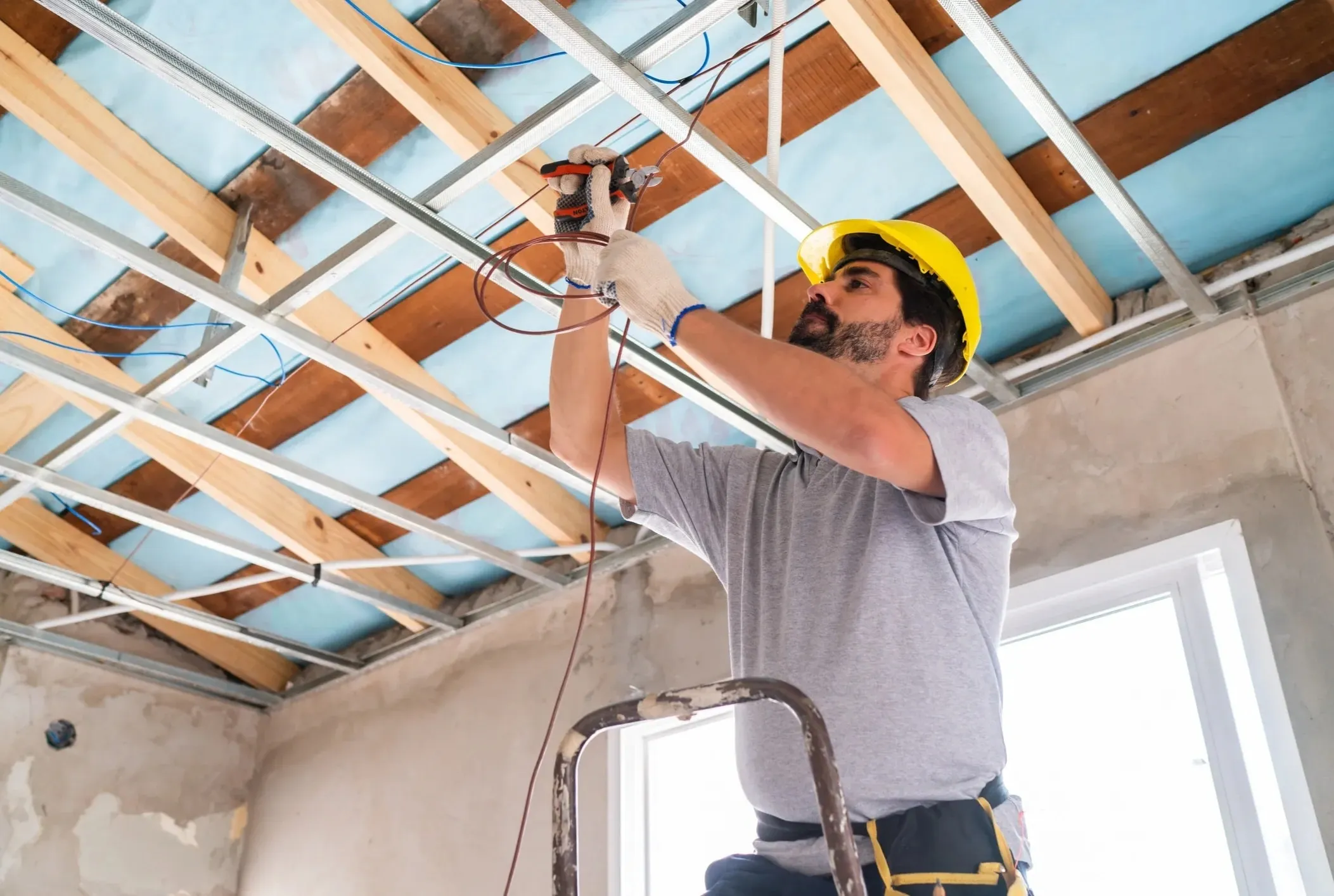
Why Hardwired Smoke Detectors Matter
Battery-only smoke alarms work until someone borrows the battery for the TV remote. Hardwired smoke detectors run on your home’s power, with a backup battery that keeps them working during an outage. You don’t have to remember to keep them alive.
When hardwired alarms are interconnected, a fire in one part of the house sets off every alarm. That early warning matters most at night, when people are asleep behind closed doors.
Our Smoke Detector Installation Services
We handle smoke detector installation for existing homes, remodels and additions:
- Replacing old hardwired alarms with new ones
- Adding new hardwired alarms where there were none
- Interconnecting alarms so they sound together
- Installing combination smoke and carbon monoxide alarms
- Updating alarms as part of a remodel, addition or rewire
- Tracking down chirping, nuisance alarms and dead units
Interconnected Smoke Alarms
In an interconnected system, each alarm is linked to the others through an extra wire in the circuit or by a wireless signal. When one senses smoke, they all go off.
In homes where running new wire is hard, like plaster walls with no attic access, wireless interconnect alarms can be a good fit. They still get power from the house wiring at each location, but they talk to each other by radio. We’ll recommend what works best for your walls and layout.
Combination Smoke and CO Detectors
Carbon monoxide (CO) is a gas you can’t see or smell. It can come from a furnace, water heater, fireplace, attached garage or gas range. A CO alarm sounds when levels rise.
If your home has any fuel-burning appliances or an attached garage, we recommend CO alarms. Combination smoke and CO detectors put both in one device, which keeps ceilings cleaner and means fewer alarms to maintain.
Replacing Smoke Detectors That Are 10 Years Old
Smoke alarms don’t last forever. Manufacturers recommend replacing them about every 10 years because the sensors become less reliable over time. Pressing the test button checks the horn and battery, but it doesn’t fully test how well the sensor detects smoke.
Here’s how to check yours:
- Take the alarm down from its mounting plate.
- Look for the date of manufacture printed on the back.
- If it’s near 10 years old, or there’s no date at all, plan to replace it.
When one alarm is old, the rest usually are too. We typically replace the whole set at once so they match and interconnect properly.
Where Smoke Alarms Should Go
Placement rules can vary with the age of the home and the work being done. In general, alarms should be installed:
- Inside every bedroom
- In the hallway or area outside each sleeping area
- On every level of the home, including the basement
- Away from kitchens and bathrooms where cooking and steam cause false alarms
During your visit, we’ll walk through the house and recommend locations that fit your layout.
Chirping Smoke Detector Troubleshooting
A chirping alarm is almost always telling you something. Common causes include:
- Low backup battery. The most common reason. Replace it and reset the alarm.
- End of life. Many alarms chirp when they reach the end of their service life.
- Dust or insects inside the sensing chamber can cause chirps or false alarms.
- A loose connection at the wiring plug or on the circuit.
If new batteries don’t solve it, or several alarms go off with no smoke, we’ll find the cause. Our electrical repair visits cover this kind of detective work.
Smoke Alarms During a Remodel or Rewire
If you’re opening walls for a remodel or whole home rewiring, it’s the ideal time to add hardwired, interconnected alarms. The wiring is easy to run while ceilings are open. Buyers and home inspectors also look for working alarms, so it pairs well with a home electrical inspection.
Why Families Choose Current Electrical Systems
We’ve been doing electrical work in Ann Arbor since 1994, and our electricians are union trained through IBEW Local 252. We install hardwired smoke detectors neatly, test every alarm together before we leave and show you how to silence and test them. There’s no scheduling fee, and you pay only for the time we work.