
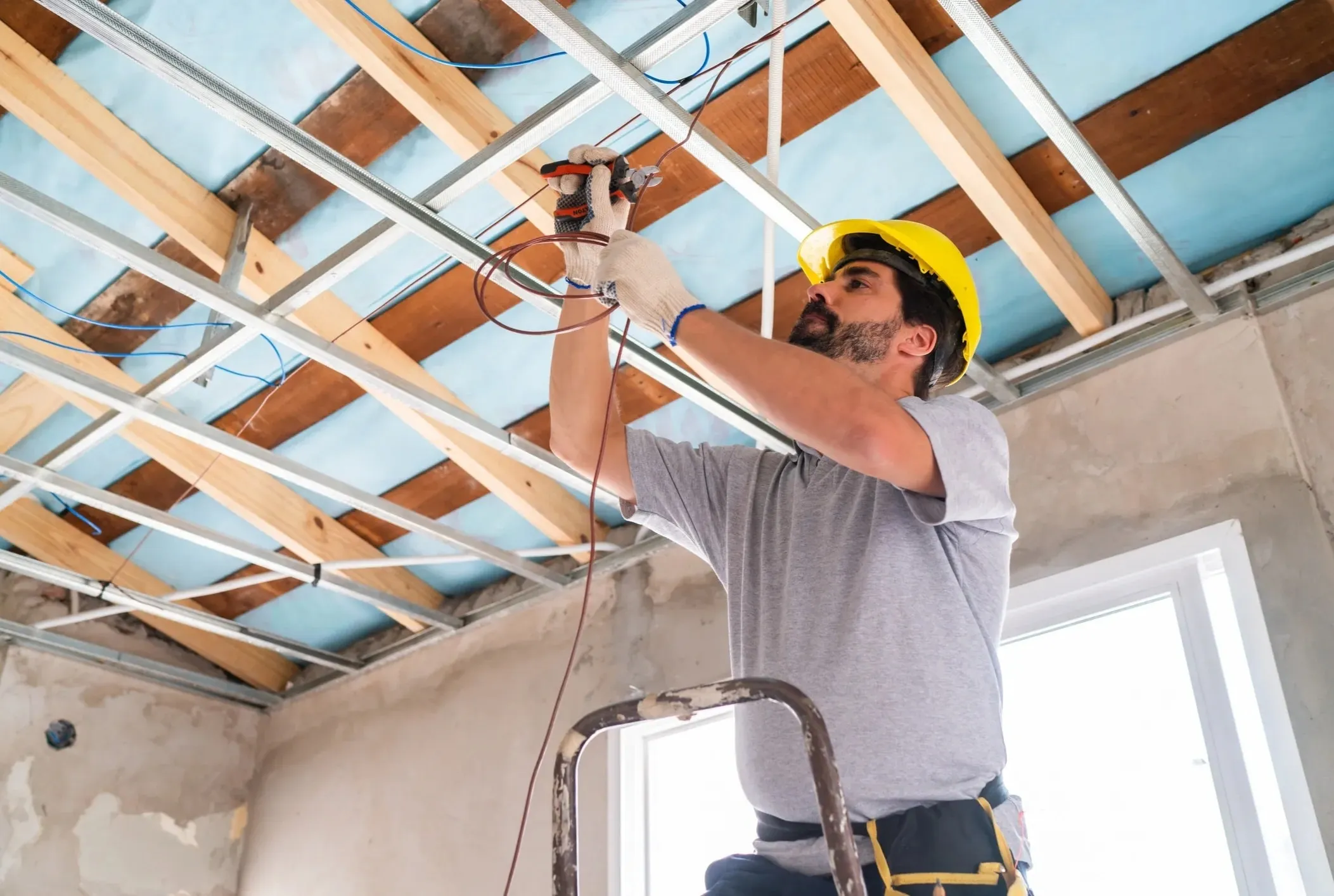
Knob and Tube Wiring Replacement Is Our Specialty
Knob and tube replacement is the work we’re known for, and it takes patience and a plan. Replacing it has been a core part of our work since 1994, and our electricians know how to trace these old circuits, find every live run and replace them without tearing a historic home apart.
Ann Arbor has a lot of older housing, especially in neighborhoods like the Old West Side, Burns Park, Water Hill and Kerrytown, where many homes date to the early 1900s. That’s where knob and tube wiring still turns up most often, sometimes hidden behind plaster long after the rest of the house was updated.
What Is Knob and Tube Wiring?
Knob and tube wiring was the standard way to wire homes from the late 1800s into the 1930s and early 1940s. Instead of a single cable with several wires inside, it uses two separate wires, a hot and a neutral, run apart from each other.
- Porcelain knobs hold the wires away from joists and studs.
- Porcelain tubes protect the wires where they pass through framing.
- Cloth and rubber insulation covers each wire.
- Loom, a flexible cloth sleeve, protects the wires where they enter boxes and fixtures.
It was solid work for its time. The problem is that it’s now 80 to 100 years old and was never designed for modern loads.
How to Identify Knob and Tube Wiring in Your Home
You can often spot knob and tube wiring yourself. Look for:
- White porcelain knobs nailed to basement joists or attic rafters, with single wires wrapped around them
- Porcelain tubes through joists, with a wire running through each one
- Black cloth-covered wires running separately, often a few inches apart
- Two-prong outlets throughout the house
- Old push-button light switches
- A fuse box, or a newer panel fed by old cloth-covered wires
Finding old knobs doesn’t always mean the wiring is live. Many homes had it partly replaced decades ago and the old runs left in place. We test each circuit to tell you what’s still active.
Why Insurers and Home Buyers Flag Knob and Tube Wiring
Knob and tube wiring is one of the first things home inspectors note in an older house. Buyers see it on the report and often ask for a credit or for the wiring to be replaced before closing. Some lenders and insurers follow the same pattern.
Insurers look at it because of its age and its limits. It has no ground wire, so there’s no path for fault current and no protection for electronics. The insulation cracks with age. And after a century, many systems have amateur splices and additions that no one can see. Replacing it removes all of those questions at once.
Knob and Tube Wiring and Insulation Contact
This is the risk many homeowners don’t know about. Knob and tube wiring was designed to cool itself by releasing heat into the open air around each wire. That’s why the wires are spaced apart.
When blown-in or batt insulation is packed around them, the heat has nowhere to go. Over time that can damage the old insulation on the wires and raise the risk of a fire. It’s a common situation in older homes that were insulated for comfort without anyone checking the wiring first.
If you’re planning to insulate an older home, have us replace the wiring before the insulation goes in.
Can Knob and Tube Wiring Be Repaired Instead?
Homeowners often ask whether they can keep the old wiring and just fix the bad spots. Small repairs to knob and tube wiring are possible, but they rarely make sense. The whole system is the same age, so patching one section leaves the rest just as brittle and still ungrounded.
Repairs also don’t solve the insurance question or the insulation problem. In most cases, replacing the live circuits is the better value over the long run. When only a few circuits remain active, a targeted replacement can be a smaller project than you expect.
Our System for Less Damage and Lower Cost
The biggest worry we hear about knob and tube replacement isn’t the wiring. It’s the walls. Homeowners picture holes in every room, weeks of patching and a second bill from a plasterer.
Over years of rewiring older homes, we’ve developed a system that minimizes the repairs needed after we’re done. We plan every new run before we open anything, reach as much as possible from the attic and basement, and make only the openings we truly need.
Fewer openings means less patching, less painting and less time with your home disrupted. It also keeps the total cost of the project down, because the repair work that follows a rewire is often a big part of the bill.
How We Replace Knob and Tube Wiring
- Free inspection and estimate. We identify which circuits are knob and tube, which are live and what the panel can handle.
- Circuit plan. We lay out new, grounded circuits sized for today’s kitchens, bathrooms and bedrooms.
- Fish new wire. Working from the attic and basement, we fish modern cable through walls and ceilings and cut small openings only where needed.
- Disconnect the old system. We disconnect every old run from power. Exposed sections in the basement and attic come out, and sections sealed in walls are left dead.
- Panel and inspection. Many homes also need a new panel, and we coordinate the permit and inspection.
Most families stay home during the work. We restore power to finished areas as we go.
Pairing Knob and Tube Replacement With a Panel Upgrade
Homes with knob and tube wiring often still have a fuse box or an undersized panel. Replacing the wiring and the electrical panel together saves a second project later and gives you room for new circuits, AFCI and GFCI protection and future loads.
If you have an older breaker panel, we’ll also check whether it’s a Federal Pacific or Zinsco panel, which we recommend replacing.
Buying or Selling a Home With Knob and Tube Wiring
If you’re buying, an electrical inspection before closing tells you how much knob and tube is still live and what replacing it involves. That information helps you negotiate with confidence.
If you’re selling, replacing the wiring before listing removes one of the most common inspection objections. We can document the completed work and the passed inspection for your buyer and their insurer.
Why Homeowners Choose Current Electrical Systems
We’ve been rewiring older Ann Arbor homes since 1994, and our electricians are union trained through IBEW Local 252. We respect the plaster, woodwork and character that make these houses worth keeping. For more on partial and whole house projects, see our house rewiring page.