
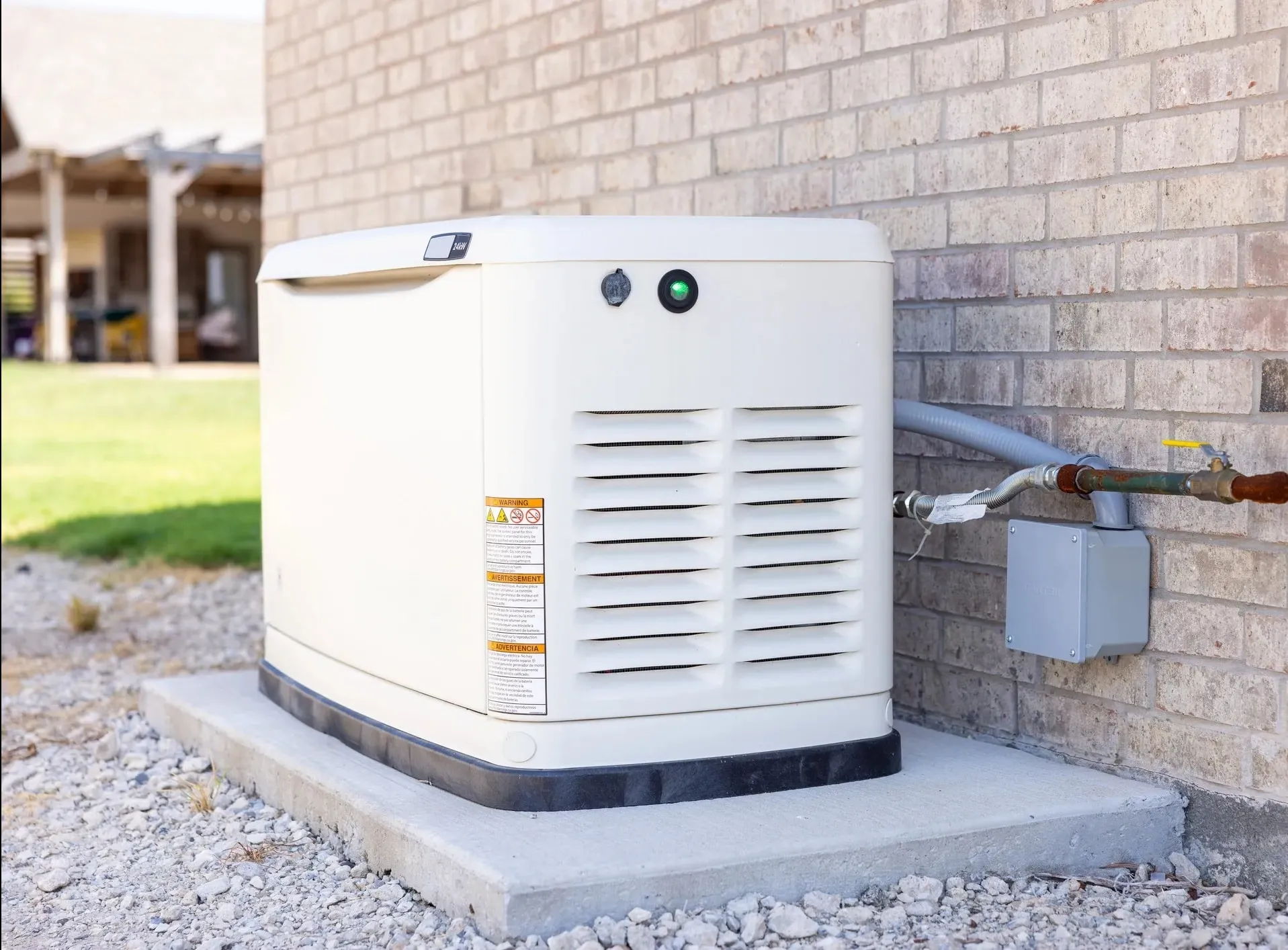
How a Whole House Generator Works
A whole house generator, also called a standby generator, is a permanent backup power system. It sits outside on a pad like a central air conditioner and connects to your home’s natural gas or propane supply, so there is no gas can to fill.
The key part is the automatic transfer switch. It watches the power coming from DTE. When the power drops, it signals the generator to start, waits for it to reach full speed, then switches your home over to generator power. When utility power returns, it switches back and lets the generator cool down and shut off.
The whole process happens without you lifting a finger, whether you are asleep, at work or away on vacation.
Generac and Honeywell Generator Installation
We install Generac and Honeywell home standby generators, two of the most common brands in Michigan neighborhoods. Both offer a range of sizes for everything from a few essential circuits to a large home with central air.
As part of Generac generator installation, we also set up the unit so you can monitor it. Many current models connect to an app that shows the generator’s status, exercise schedule and maintenance reminders on your phone.
Standby Generator Sizing: Whole-Home or Essential Circuits
Sizing is where a good standby generator installation starts. Too small and it struggles when the air conditioner kicks on. Too large and you pay for capacity you never use.
There are two common approaches:
- Whole-home backup. The generator and a service-rated transfer switch cover your entire electrical panel. You live normally during an outage.
- Essential circuits. A smaller generator powers a dedicated subpanel with the circuits you choose, such as the furnace, sump pump, refrigerator, well pump, some lights and outlets.
Load management modules can bridge the gap. They temporarily hold off a large appliance, like an air conditioner or electric dryer, while other loads are running, so a moderately sized generator can back up more of the home. We add up your real loads and starting surges before we recommend a size.
The Natural Gas Connection
Most Ann Arbor homes with a standby generator run it on natural gas from DTE. The generator needs a gas line sized to deliver full fuel flow while the furnace, water heater and other gas appliances are running at the same time.
During the estimate, we look at your gas meter location and existing piping. In some homes the gas meter or service needs to be checked with the utility to make sure it can supply the added load. We plan the gas connection as part of the project so the installation stays on one schedule.
Pad, Placement and Clearances
Where the generator sits affects safety, noise, appearance and future service. We place it on a level concrete or composite pad and consider:
- Manufacturer clearances from the house, windows, doors, soffit vents and dryer or furnace vents
- Distance to the gas meter and electrical panel, which affects wire and pipe runs
- Room for a technician to open the enclosure and service the unit
- Where snow drifts, gutters drain and plows push piles in winter
- How the unit looks from the street and how close it sits to your neighbors
Permits and Inspection Coordination
A standby generator involves electrical, gas and sometimes zoning rules, depending on your city or township. We pull the electrical permit, coordinate the inspections the project needs and meet the inspector on site. That way you are not stuck managing appointments with several offices.
Before the generator connects, we also check your panel. Older or overloaded panels may need attention first, and some homes pair the project with a 200 amp service upgrade or electrical panel replacement.
How Our Standby Generator Installation Works
- Walkthrough. We discuss what you want powered, check your panel and gas service, and pick a location.
- Sizing and proposal. We recommend a Generac or Honeywell model and transfer switch, with an honest estimate of the time and materials involved.
- Permits. We handle the paperwork and schedule inspections.
- Installation. The pad is set, the generator is placed, and our electricians install the transfer switch and wiring.
- Startup and walkthrough. We start the generator, test a full transfer and show you how to read its status.
Generac Maintenance and Ongoing Care
A standby generator is an engine, and engines need care. Most run a short self-test on a set schedule to keep parts lubricated and the battery charged. Beyond that, plan on routine service at least once a year, or sooner after a long outage.
Typical Generac maintenance includes changing the oil and filters, checking spark plugs, testing the battery and clearing leaves or snow from the enclosure. Our guide to generator maintenance in Michigan walks through each step. If your generator ever fails to start or transfer, our electrical repair team can track down the problem.
A More Affordable Alternative
If a standby unit is more than you need right now, a portable generator with an interlock kit can power your essentials for far less. It is a smart first step, and many homeowners upgrade later.
Why Choose Current Electrical Systems for Your Standby Generator
We have been doing electrical work in Ann Arbor since 1994, and our electricians are union trained through IBEW Local 252. We install Generac and Honeywell generators with neat wiring, careful placement and clear communication from start to finish. Call (734) 210-7667 to plan your whole house generator installation.