
The Outage Always Comes at a Bad Time
It’s the first real ice storm of the year. Branches snap, the lights go out, and the house starts cooling down. This is the moment your generator has waited all year for, and the moment you find out whether anyone checked it since last winter.
Generator maintenance is simple when you stay ahead of it. This guide covers what standby and portable generators need, how Michigan’s seasons change the checklist, and the signs of a failing generator.
Why Generator Maintenance Matters in Michigan
Our weather is hard on equipment that sits outside. Summer thunderstorms bring outages and heat, fall buries enclosures in leaves, and winter adds snow drifts, ice and deep cold that make engines and batteries work harder to start.
A generator that isn’t maintained tends to fail on the one day you need it. Most of the problems we see are small and preventable: a dead battery, old oil, a clogged air filter or a vent blocked by snow.
Standby Generator Maintenance Basics
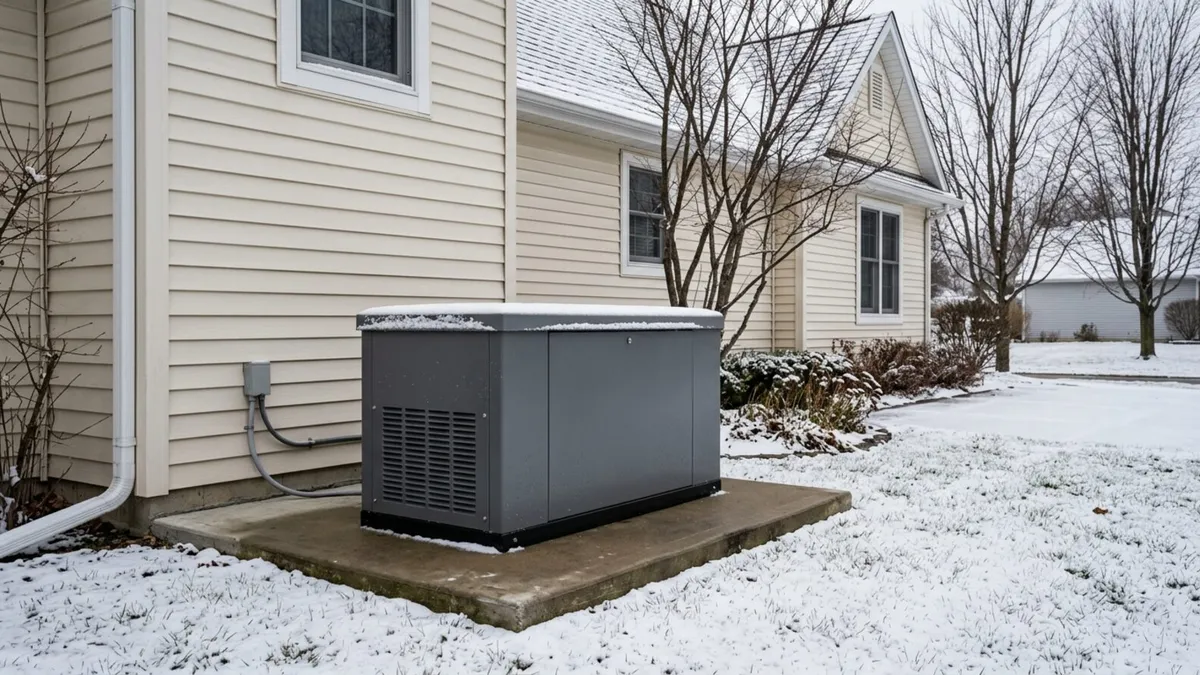
A home standby generator, also called a whole house generator, is permanently installed and starts on its own when the power drops. Brands like Generac and Honeywell run a short self-test, called an exercise cycle, on a set schedule, often weekly.
Here’s what regular Generac maintenance and standby service generally includes:
- Oil and oil filter. Changed on the interval in your manual, based on run hours and at least yearly
- Air filter. Inspected and replaced when dirty
- Spark plugs. Checked and replaced on schedule
- Battery. Tested under load and replaced before it fails, usually every few years
- Controller and transfer switch. Checked for error codes and correct operation
- Enclosure and vents. Cleared of nests, leaves and debris
Between service visits, you can help by listening for the weekly exercise and glancing at the status lights. If the unit didn’t run on its scheduled day, or a yellow or red light is on, call for service.
Portable Generator Maintenance
Portable generator maintenance is more hands-on because the unit usually sits in a shed or garage until you need it.
- Fuel. Gasoline goes stale in storage. Add fuel stabilizer and run the engine for a few minutes so treated fuel reaches the carburetor, or store the unit with the fuel drained, as your manual recommends.
- Oil. Check the level before every use and change it on the schedule in the manual.
- Monthly start. Run it for several minutes about once a month with a small load attached.
- Cords. Inspect extension cords and the power inlet cord for cuts or crushed spots.
Never run a portable generator in a garage, basement or near open windows. Carbon monoxide builds up fast and can’t be seen or smelled. Keep working CO alarms on every level of the house.
For a safer way to power your home, a generator interlock kit lets you connect a portable generator through a single inlet and your main panel, without cords snaking through a doorway and without the danger of backfeeding the utility lines.
Preparing Your Generator for Winter
Fall is the time to get ready, before the first freezing night. Use this list:
- Clear the area. Rake leaves and cut back plants so there’s open space around the enclosure.
- Check the battery. Cold weather reduces battery power, and a weak battery is one of the most common reasons a generator fails to start.
- Confirm the oil grade. Some manufacturers call for a different oil viscosity in cold climates. Your manual says which.
- Look for a cold weather kit. Many standby models offer a battery warmer or oil heater for very cold regions. Ask us if yours has one.
- Plan for snow. After every storm, clear drifts away from the vents and exhaust so the generator can breathe.
For portable units, store them where you can wheel them out quickly. A generator buried behind the lawn mower in a snowed-in shed won’t help much at 2 a.m.
Spring and Summer Checks
When the snow melts, look over the enclosure for damage from plows, shovels or falling ice. Clear out any nests, since mice and wasps like the shelter. Summer thunderstorms and high winds knock out power too, so late spring is a good time for annual service.
If your standby generator ran for days during a winter outage, it may be due for an oil change well ahead of its yearly visit.
Signs of a Failing Generator
Call us if you notice any of these:
- The generator doesn’t run its weekly exercise, or runs it and shuts down early
- It cranks slowly, especially on cold mornings
- Warning lights or error codes appear on the controller
- The engine surges, runs rough or smokes
- Oil, coolant or fuel leaks under the unit
- New knocking, rattling or grinding sounds
- The transfer switch doesn’t move your home to generator power during an outage
Catching these early usually means a repair instead of a replacement.
Test the Whole System Before Storm Season
A generator that starts is only half the story. The transfer switch also has to move your home onto generator power and back again. Once a year, ask your service technician to run a transfer test under load, so you know the whole setup works together. Please don’t simulate an outage by shutting off the main breaker yourself.
For a portable generator with an interlock kit, practice the switchover in daylight on a calm weekend. Walk through each step: start the generator outside, connect the inlet cord, turn off the main, slide the interlock and turn on the generator breaker. Doing it once without pressure makes it far easier in the dark.
Keep a Simple Maintenance Log
Tape a small card inside the garage door or keep a note on your phone. Record the date of each oil change, battery replacement and service visit, plus the run hours shown on the controller. A log makes it easy to see when service is due and gives your technician useful history after a long outage.
Generator Service in Ann Arbor and Washtenaw County
We install Generac and Honeywell home standby generators with transfer switches, and we handle the permits and inspections that come with them. We also install interlock kits for portable generators. Current Electrical Systems has served Ann Arbor, Saline, Dexter, Brighton and the surrounding area since 1994, with union electricians from IBEW Local 252. Visit our generator services page or call us to schedule a visit.
If your panel is older or near capacity, we can also check whether it’s ready for a transfer switch. Our guide to understanding your electrical panel is a good place to start.