
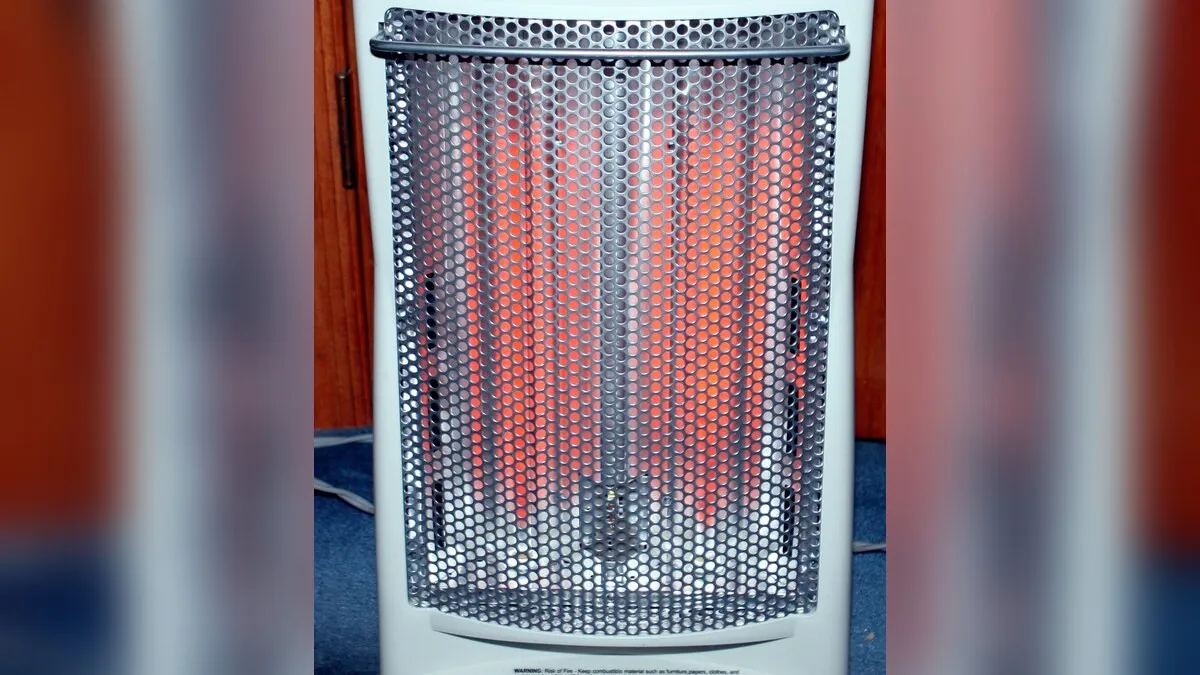
When the Space Heater Goes On and the Lights Go Out
The first cold week arrives and the spare bedroom is chilly, so the space heater comes out of the closet. An hour later the room goes dark and you are walking down to the basement with a flashlight.
If your breaker keeps tripping every time the heater runs, the house is telling you something specific. The cause is usually one of three things, and each one points to a different fix.
Why Your Breaker Keeps Tripping: Three Reasons
A breaker is a safety device that cuts power when a circuit is asked to carry too much or a wire touches something it should not. It trips for one of three reasons.
- Overload. Too many things, or one big thing, drawing more current than the circuit is built for. This is the usual cause with heaters.
- Short circuit. A hot wire touches a neutral or another hot wire. The breaker trips at once, often with a pop.
- Ground fault. Current leaks to ground, for example through damaged insulation or moisture. GFCI protection watches for this.
The Consumer Product Safety Commission has long advised finding out why a breaker trips instead of just resetting it. Its advice also warns against putting high-current devices such as heaters on low-amperage circuits.
How Much Power a Space Heater Uses
Many portable heaters are rated at 1,500 watts. On a 120 volt household circuit, that is about 12.5 amps. A common bedroom circuit has a 15 amp breaker.
That sounds like it fits, but the electrical code treats a load that runs three hours or more as continuous. Under NEC 210.20(A), the breaker has to be sized at 125 percent of a continuous load. A heater alone at 12.5 amps works out to about 15.6 amps, which is already past a 15 amp breaker.
Add a lamp, a TV or a phone charger on the same circuit and a trip is no surprise.
Why Older Ann Arbor Homes Trip More Often
Many Washtenaw County houses were wired when a bedroom needed a lamp and a radio. Several rooms often share one circuit, and an outlet in the bedroom may be on the same breaker as the hall light and the living room.
Older wiring adds another wrinkle. Houses with knob and tube wiring were not designed for modern heaters, and insulation that is 80 years old does not take extra heat well. If a circuit is warm, buzzing or smells like something is cooking, treat that as more than a nuisance trip.
Flickering that comes with the trips is worth a look too. Our guide to why lights flicker covers the common causes.
What to Check Before You Reset the Breaker
A few quick steps will tell you a lot, and none of them involve opening the panel.
- Unplug the heater and everything else on that circuit.
- Flip the breaker fully to off, then back to on.
- Plug the heater back in by itself, directly into the wall and not through a cord or strip.
- If it holds, the circuit was overloaded by sharing. If it trips again, leave it off.
The CPSC’s winter safety advice says to plug electric space heaters directly into a wall outlet, never an extension cord or power strip, and to keep them three feet from drapes, furniture and bedding.
When to Stop and Call an Electrician
Some signs mean the problem is in the wiring, not the heater. Stop using the circuit and call us if you notice any of these:
- The breaker trips right away with nothing plugged in
- An outlet, plug or cover plate feels warm or looks scorched
- You smell burning or hear buzzing from an outlet or the panel
- The breaker will not stay on, or feels loose or hot
- Several breakers trip when different appliances run
Our electrical repair visits start by tracking down the cause, so we are not guessing at a fix.
Fixes That Keep a Heater From Tripping the Breaker
Once we know what is happening, the options are usually simple.
A dedicated circuit gives the heater, or a whole room, its own breaker. Our outlet and circuit installation work covers this, and it is the most common fix for a room that is always cold.
Splitting a crowded circuit moves some outlets to a new breaker so the load is spread out. If the panel is full, a larger service may be the real answer. Our guide to 100 amp vs 200 amp service explains how a load calculation settles that question.
Adding or changing circuits requires a permit. Michigan’s Bureau of Construction Codes requires a permit before electrical wiring is added or altered, and the City of Ann Arbor handles electrical permits through its building department. We pull the permit and meet the inspector.
Heating a Cold Room the Right Way
If one room always needs a heater, the real problem may be the room, not the circuit. A heater that runs all winter is a sign the room could use better heat, and that is a conversation to have with an HVAC contractor.
What we can do on the electrical side is make sure the circuit is sized for what you plug in, and that the panel behind it is in good shape. Our guide to understanding your electrical panel shows what the labels and breakers mean.
Have a Breaker That Keeps Tripping Checked
Our electricians are union trained through IBEW Local 252, and we have worked in Ann Arbor since 1994. On a visit we look at the circuit, find out what is on it and tell you whether it needs a new breaker, a new circuit or nothing at all.
You pay for the time on the job and the parts, with no scheduling fee, as our pricing page explains. Contact us to set up a visit. The estimate is free.