
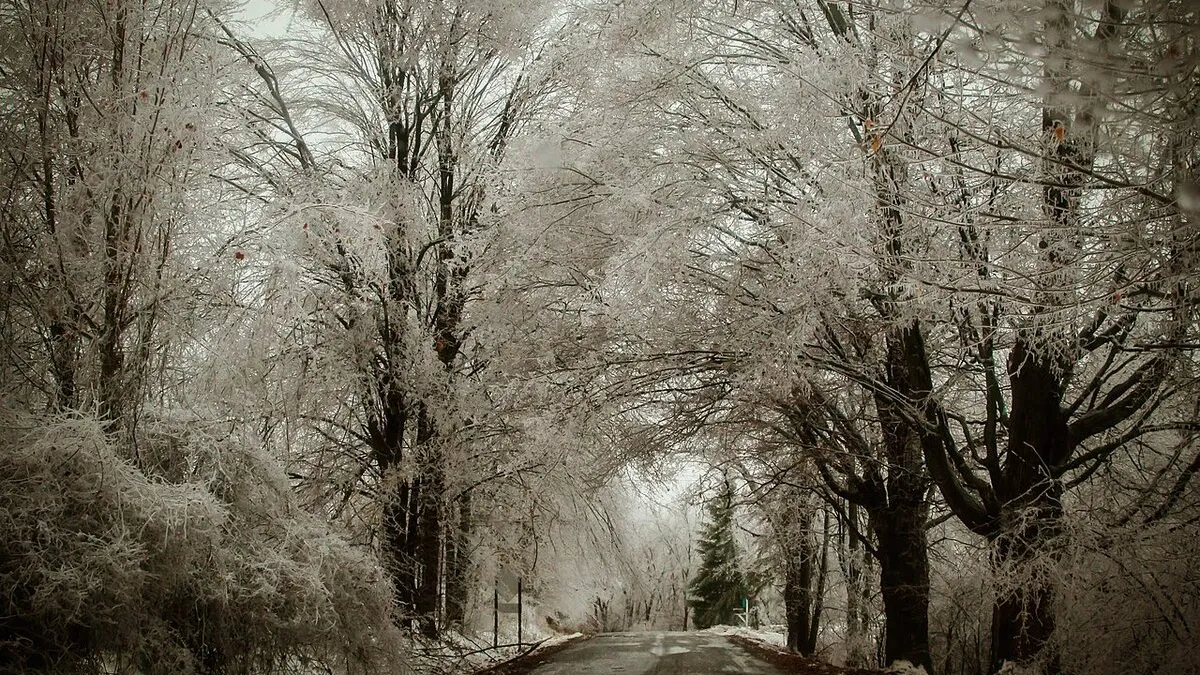
Photo: LadyDragonflyCC, CC BY 2.0, via Wikimedia Commons
When the Ice Comes Down and the Power Goes Out
The branches were coated in ice by evening, the furnace blower stopped around midnight and by morning the street is quiet. Across southeast Michigan, an ice storm can leave a house dark for a long stretch.
An ice storm power outage is not only about waiting for DTE. Before the power comes back, a few electrical checks protect your appliances and your family, and some damage has to be repaired before the utility can reconnect you.
Safety First: Downed Lines and Standing Water
Treat every downed wire as live, even if it is not sparking or humming. DTE’s outage guidance tells customers to stay at least 25 feet away from a downed line and to call 911 in an emergency.
You can report an outage to DTE at (800) 477-4747, online or in its mobile app. Keep children and pets inside until the line is dealt with.
Do not touch a panel or meter that is wet, damaged or sitting in water. Wait for help, and call us when it is safe.
Who Owns What: DTE or You
This surprises many homeowners. According to DTE, the utility is responsible for the meter and the service line running from the pole to your home. You are responsible for the other equipment at the meter location, including the service entrance cable.
In most homes the mast and weatherhead that hold the wires on your house are on the homeowner’s side too. DTE tells customers to contact a licensed electrician for repairs that belong to them.
That is why a house can stay dark after the lines on the street are back. If the mast or meter base on your house is damaged, it has to be repaired before power can be restored. Our storm damage electrical repair page walks through how those call-outs work.
Signs of Storm Damage at Your Service
Ice is heavy, and a falling limb can pull on the wires that attach to your house. Look from a safe distance for these signs.
- A service mast that is bent, leaning or pulled away from the wall
- A meter or meter base loose, cracked or hanging
- Wires sagging low across the yard or driveway
- Part of the house with power and part without
- A burning smell near the panel or meter
If you see any of them, call us for an emergency storm-damage call-out. If wires are down, report them to DTE first.
Checks to Make Before the Power Returns
When the lights come back, the surge can be harder on equipment than the outage was. A few steps while you wait make the return easier.
- Turn off or unplug large appliances, electronics and anything with a motor.
- Switch off most breakers, but leave one light on so you know power is back.
- Check that space heaters are unplugged and well away from anything that burns.
- Skip the panel if it is wet or damaged, and call an electrician.
- When power returns, bring loads back one at a time over several minutes.
If you rely on heaters when the furnace is down, our guide to why a breaker keeps tripping explains why they strain older circuits.
Using a Generator Safely in an Ice Storm Outage
A portable generator can keep a furnace blower, a sump pump and a refrigerator going. It also brings real hazards.
The Consumer Product Safety Commission says to use portable generators outdoors only, at least 20 feet from the home with the exhaust pointed away from buildings, and never inside a home, basement, shed or garage. The same notice warns that generator exhaust carries carbon monoxide, an odorless and deadly gas.
Never plug a generator into a wall outlet. A generator interlock kit is the usual safe connection, and our guide to interlock kits vs transfer switches compares the two approaches.
After the Power Is Back
Watch the house for a day or two. Flickering lights, a breaker that trips repeatedly, a warm outlet or a smell of burning plastic can show up after a surge or after ice damaged something that only fails under load.
A whole-house surge protector at the panel helps guard electronics when power returns. If a generator would have helped, our generator maintenance guide covers how to keep one ready for the next outage.
Planning Before the Next Storm
Ice storm season is a good reason to look at your service before it fails. An old mast, a rusting meter base or a full panel is easier to fix on a calm day.
If the equipment has to be replaced, it can be a good time to move from an older service to 200 amp service, since the new parts go in once and are inspected once.
When to Call Current Electrical Systems
We have served Ann Arbor and Washtenaw County since 1994, and our electricians are union trained through IBEW Local 252. We handle emergency call-outs for storm damage, and we know how to get a damaged service repaired and inspected so DTE can reconnect it.
Call us at (734) 210-7667 or contact us. Estimates are free, and our pricing is time and material with no scheduling fee.